

Photon Crypto Unhackable Security Through Quantum Mechanics
June 14, 2026
Understanding Crypto Visa Cards
June 14, 2026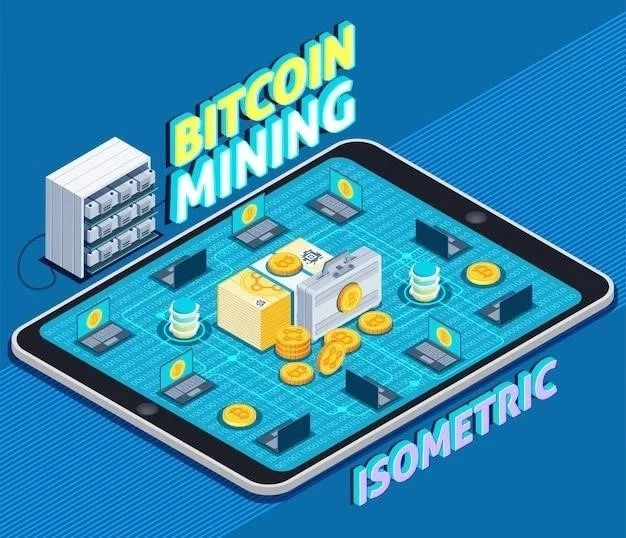
Crypto mining is the process by which transactions for various cryptocurrencies are verified and added to the blockchain digital ledger. It’s a critical component of many decentralized networks, particularly those utilizing a Proof-of-Work (PoW) consensus mechanism like Bitcoin. Miners use specialized computers to solve complex puzzles, validating and securing the network.
How Does Crypto Mining Work?
The core function of mining is to ensure the integrity and security of the blockchain. Here’s a step-by-step breakdown:
- Transaction Verification: When users send cryptocurrency, these transactions are broadcast to the network. Miners collect these unconfirmed transactions into a “block.”
- Solving the Puzzle (Proof-of-Work): This involves finding a specific hash value meeting criteria, often starting with zeros. Miners repeatedly guess a random number (a “nonce”) combining it with block data until a valid hash satisfies the network’s difficulty target.
- Block Addition: The first miner to find the correct hash broadcasts their solution to the network. Other miners verify the solution. If valid, the new block is added to the existing blockchain.
- Reward: The successful miner receives a reward, typically consisting of newly minted cryptocurrency (the “block reward”) and any transaction fees associated with the transactions in the block. This incentivizes miners to continue securing the network.
Key Concepts in Mining
- Hashing: A one-way cryptographic function that takes an input (data) and produces a fixed-size output (hash). Tiny input changes dramatically alter the output hash.
- Nonce: A “number used once” that miners repeatedly adjust in their attempt to find a valid block hash.
- Difficulty: A measure of how hard it is to find a new block. It adjusts periodically to keep the block creation time relatively constant, regardless of the total mining power on the network.
- Block Reward: The new cryptocurrency awarded to the miner who successfully adds a block. This reward typically halves at predetermined intervals (e.g., Bitcoin halving).
Types of Mining Setups
- CPU Mining: Early Bitcoin mining was done with CPUs. Today, it’s largely inefficient for most major cryptocurrencies due to low hash rates.
- GPU Mining: Graphics Processing Units (GPUs) are more powerful for mining than CPUs and are still viable for many altcoins.
- ASIC Mining: Application-Specific Integrated Circuits (ASICs) are hardware specifically designed to mine a particular cryptocurrency algorithm. They offer the highest efficiency and hash rate but are expensive and algorithm-specific.
- Cloud Mining: Involves renting mining power from a large data center. It eliminates the need for hardware ownership and maintenance but comes with its own risks and fees.
- Mining Pools: Groups of miners combine their computational power to increase their chances of solving a block and share the rewards proportionally to their contributed hash power.
Why is Crypto Mining Important?
Mining is fundamental for:
- Network Security: It makes it computationally infeasible for a single entity to control the network (a “51% attack”), thus preventing double-spending and fraudulent transactions.
- Decentralization: By distributing the verification process across numerous independent miners worldwide, it ensures no single authority controls the network.
- New Coin Issuance: Mining is how new cryptocurrency units are introduced into circulation according to a predefined schedule.
Challenges and Considerations
Despite its importance, crypto mining faces challenges:
- High Energy Consumption: The intensive computational power requires significant electricity, raising environmental concerns and operational costs.
- Hardware Costs: ASIC miners and powerful GPUs are expensive investments.
- Volatility: The profitability of mining is highly dependent on the cryptocurrency’s market price and network difficulty.
- Centralization Concerns: The rise of large mining farms and pools can lead to concerns about potential centralization of hash power.